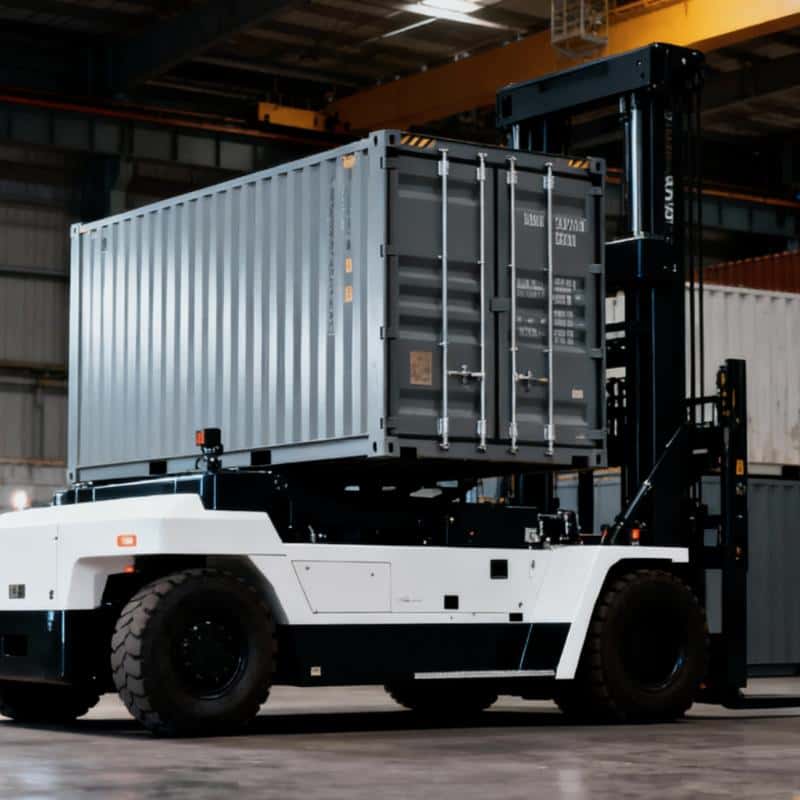
Autonomous Compute for Container Transport Vehicles

Unmanned container transport vehicles need reliable compute for multi-sensor perception, route planning, vehicle control, and yard-level autonomous operation. MScape provides rugged edge AI computing and control platforms for logistics, ports, and heavy-duty unmanned transport systems.
autonomous compute for container transport vehicles

The Challenge

Traditional unmanned transport vehicles often depend on fixed infrastructure, ground markers, magnetic tracks, or centralized scheduling. When infrastructure or dispatch systems fail, operations can stop. Fixed path planning also limits flexibility, while weak cargo recognition and complicated management increase labor cost and reduce efficiency in modern logistics environments.

MScape Solution Approach

MScape uses the N210 compute foundation to help autonomous container transport vehicles upgrade from fixed-route execution toward perception-driven navigation, cargo recognition, and fleet collaboration. The platform integrates sensors, wireless communication, and real-time data exchange for safer and more flexible transport.

1

Perception-Driven Navigation

With advanced sensors and algorithms, transport vehicles can understand the environment, adjust to real-time conditions, and plan routes more flexibly than fixed-track or marker-based systems.

2

High-Capacity Sensor Access

Automotive-grade connectors and GMSL2 camera support allow the vehicle to connect up to 14 sensor channels, improving perception coverage for container handling and surrounding safety awareness.

3

Fleet Collaboration and Dispatch

5G communication and DDS real-time communication support enable efficient task assignment, cloud-dispatch coordination, and route planning across multiple vehicles in logistics and industrial sites.

The Result: A Smarter Compute Base for Autonomous Transport

N210 helps container transport vehicles move beyond rigid infrastructure dependence toward autonomous perception, cargo recognition, safe routing, and coordinated fleet operation.

N210Robot-side compute foundation for autonomous transport vehicles
14 SensorsSensor access through automotive connectors and GMSL2 cameras
5G / Wi-FiHigh-speed wireless communication for fleet and cloud coordination
DDSReal-time communication support for multi-vehicle collaboration
Cargo RecognitionVisual recognition and deep learning for container handling
Flexible RoutesDynamic path planning for changing logistics environments

Why This Matters for Robot Builders

Autonomous transport vehicles need to operate when the real site changes. Compute, sensing, communication, and fleet coordination must be designed together to reduce dependence on brittle fixed infrastructure.

Key Engineering Requirements Addressed

AutonomousSupports environmental perception and flexible navigation
ConnectedEnables high-speed vehicle-cloud and vehicle-fleet communication
ReliableReduces dependence on single-point fixed infrastructure
ScalableDesigned for multi-vehicle logistics and industrial deployment

Developing an autonomous transport vehicle? Share your route type, sensor layout, cargo recognition needs, wireless plan, and fleet coordination model.

Start Technical Inquiry

Other Applications

bipedal humanoid robots

Bipedal / Humanoid Robots

Bipedal / Humanoid Robot AI Compute & Control Bipedal and humanoid robots need robot-side intelligence that fits inside tight mechanical spaces while still supporting perception, ...
Read More →
rugged ai compute for autonomous heavy equipment

Autonomous Excavators

Rugged AI Compute for Autonomous Heavy Equipment Autonomous excavators and heavy machines need reliable compute for perception, positioning, path planning, and hydraulic control in demanding ...
Read More →
wheeled humanoid robot ai computing platform

Wheeled Humanoid Robot Compute Platforms

Wheeled Humanoid Robot Compute Platforms Wheeled humanoid robots combine mobile navigation, upper-body interaction, vision perception, and real-time control in one system. MScape provides robot-side compute ...
Read More →
Scroll to Top