English
 Español
 Português
 Deutsch
 한국어
한국어 日本語
日本語 Italiano
 Français
 العربية
 Türkçe
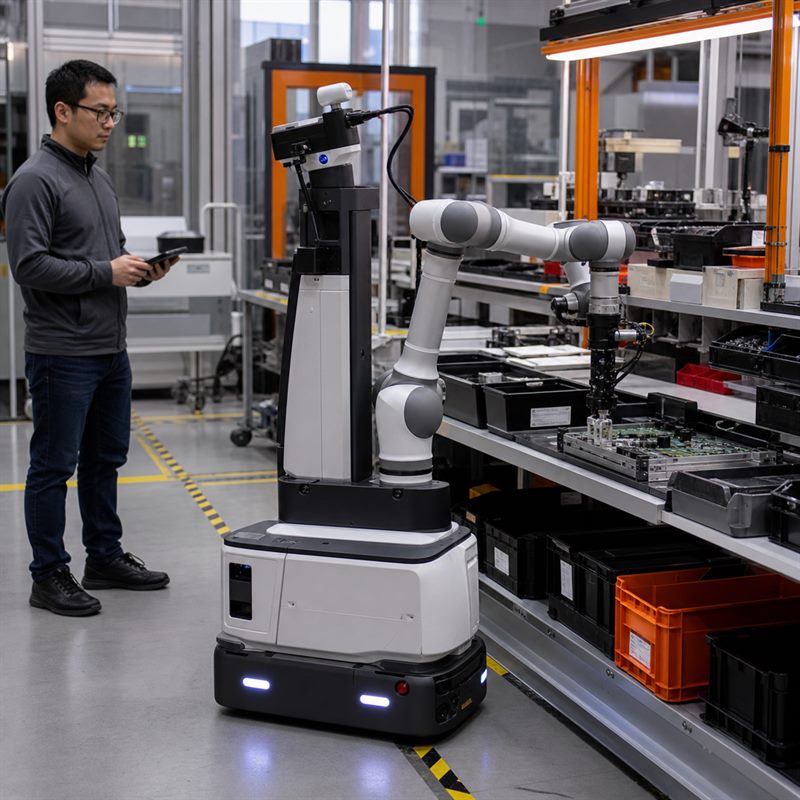
A silicon-based brain is a robot-side compute platform that uses semiconductor hardware, AI algorithms, sensor interfaces, and real-time control capabilities to support perception, reasoning, decision-making, and physical action.
Definition: What Is a Silicon-Based Brain?
In robotics and embodied AI, a silicon-based brain refers to a hardware-centered intelligence platform that brings AI compute and robot control close to the machine. It is “silicon-based” because the intelligence runs on semiconductor processors, accelerators, memory, and interfaces rather than on biological neurons or remote cloud servers.
In practical product terms, a silicon-based brain is more than an AI chip. It is a complete robot-side platform that may include CPU, GPU, NPU or other accelerators, memory, storage, camera interfaces, industrial communication buses, real-time operating system support, thermal design, and software compatibility.
Core Characteristics
Runs perception, inference, planning, and decision workloads directly on the robot or edge device.
Connects sensors, communication interfaces, control buses, and deployment software in one physical system.
Supports both high-level decision-making and low-latency execution through separated but coordinated compute layers.
Designed for machines that must sense, decide, and act in the physical world under space, heat, and power constraints.
Silicon-Based Brain vs. Edge AI Computer vs. Neuromorphic Chip
| Concept | Main Meaning | Robot Deployment Focus |
|---|---|---|
| Neuromorphic chip | A chip architecture inspired by biological neural systems | Usually focuses on the computing model or hardware design |
| Edge AI computer | A local computing device for AI inference at the edge | Focuses on local AI workload execution |
| Silicon-based brain | A robot-side intelligence platform combining AI compute, sensor integration, and control | Focuses on perception, reasoning, decision-making, and action in one deployable system |
Why It Matters for Embodied AI
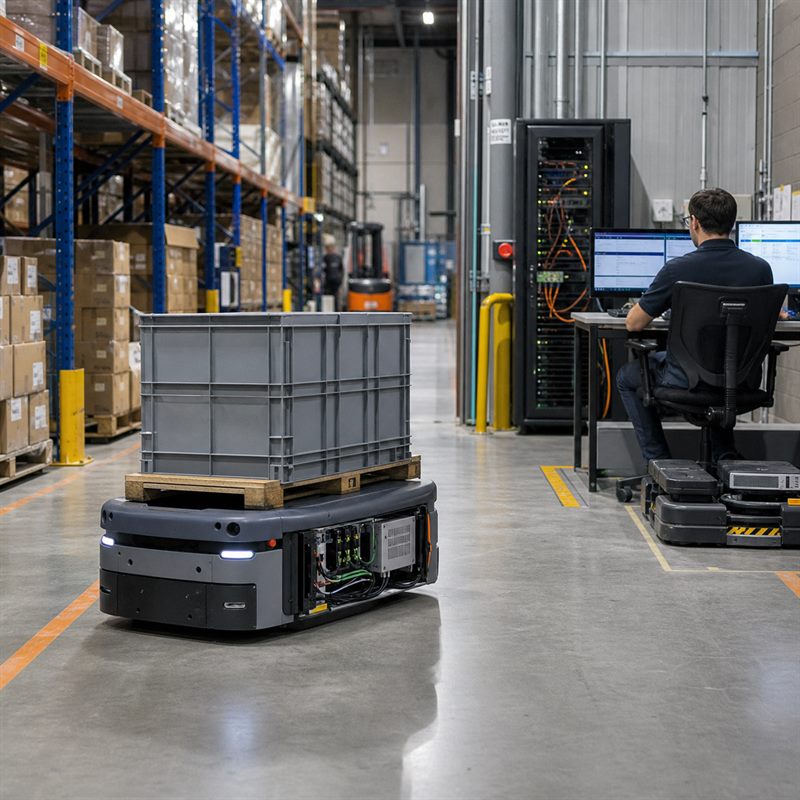
Embodied AI systems are different from cloud-only AI systems. A language model can wait for a network response. A robot crossing a warehouse, balancing on legs, avoiding a person, or grasping an object cannot depend on unpredictable latency.
A silicon-based brain helps move the intelligence loop closer to the robot. It allows perception, inference, planning, and control decisions to happen locally, while the cloud can still support model training, fleet learning, updates, and data analysis.
Typical Technical Requirements
- Heterogeneous compute architecture for different AI and control workloads.
- High memory bandwidth and storage performance for model and sensor data.
- Camera, lidar, IMU, encoder, and industrial I/O integration.
- Real-time operating system or real-time control support for deterministic motion.
- Thermal and mechanical design suitable for compact robot bodies.
- Software compatibility with robotics middleware and AI development workflows.
Short Answer
A silicon-based brain is the robot-side compute and control foundation for embodied AI. It provides local AI inference, sensor processing, decision support, and real-time execution capability inside the robot or edge device.
MScape’s Product Context
MScape uses the silicon-based brain concept to describe robotics compute platforms that support robot-side intelligence. The MScape N Series and T Series address different parts of this architecture: N Series platforms focus on robotics edge AI compute, while T Series platforms focus on AI compute and real-time control integration.
Relevant MScape Platforms
- MScape T500: high-performance robot AI computing platform for demanding edge AI workloads.
- MScape T200: AI compute and control platform for brain-cerebellum robot architecture.
- MScape N1000: high-performance robotics edge AI computer for advanced embodied AI systems.
- MScape N203: multi-camera edge AI computer for sensor-rich robot perception.
Where Silicon-Based Brains Are Used
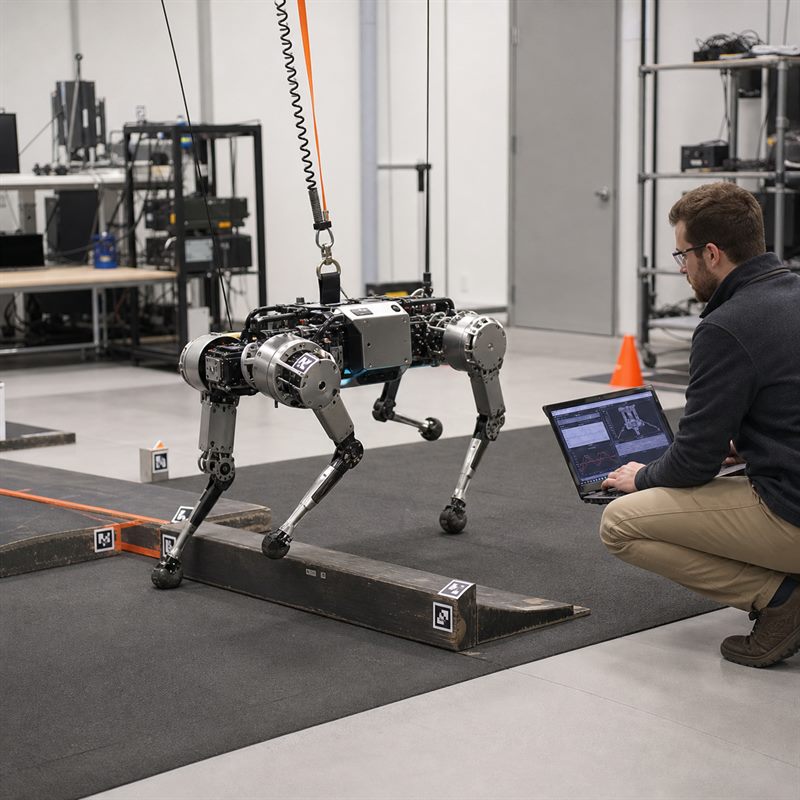
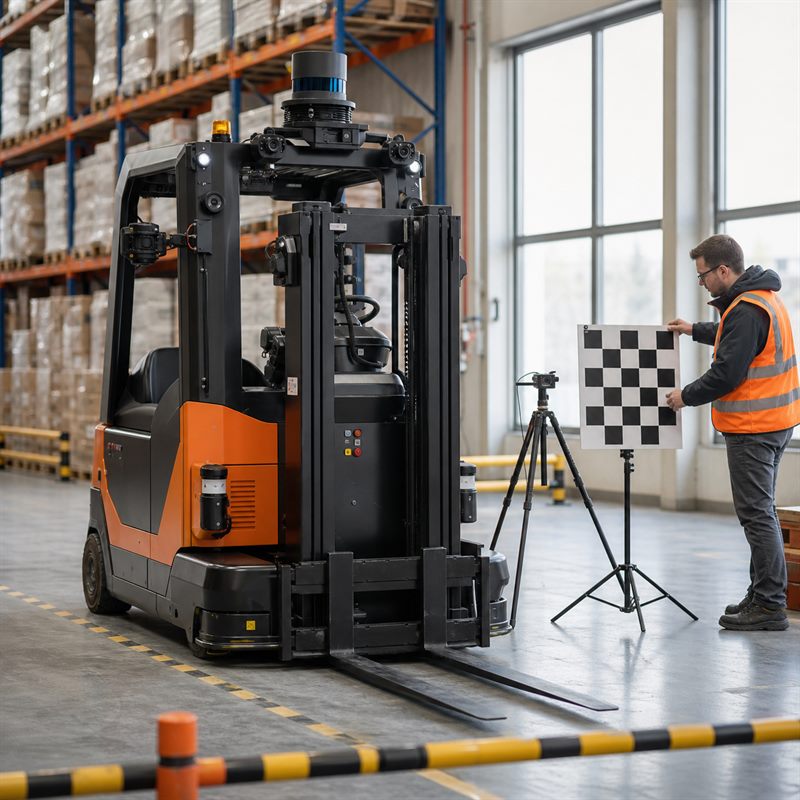
Silicon-based brain platforms are relevant to humanoid robots, wheeled humanoid robots, quadruped robots, autonomous forklifts, autonomous drones, and industrial robot systems that require local intelligence.
FAQ
Is a silicon-based brain only a marketing term?
It can be used as a product term, but technically it refers to a robot-side intelligence platform built on semiconductor hardware and designed to support AI perception, reasoning, decision-making, and control.
Does every robot need a silicon-based brain?
Simple fixed-function machines may not. Robots that need autonomy, perception, adaptation, local AI inference, or real-time motion control benefit from a dedicated robot-side compute and control platform.
How is this different from cloud AI?
Cloud AI is useful for training, data storage, and fleet-level intelligence. A silicon-based brain handles local execution where latency, reliability, privacy, and physical safety matter.