English
 Español
 Português
 Deutsch
 한국어
한국어 日本語
日本語 Italiano
 Français
 العربية
 Türkçe
Robot perception is not the same as adding cameras. A robot must synchronize, fuse, and interpret data from many sensors before it can understand the physical world well enough to act.
What Is Robot Perception?
Robot perception is the process of turning raw sensor data into useful machine understanding. A camera produces pixels. Lidar produces point clouds. An IMU produces acceleration and angular velocity. Force sensors produce contact signals. None of these signals alone tells the robot what to do.
Perception becomes valuable when the robot can combine these signals into a consistent model of its environment, body state, objects, obstacles, motion, and task context.
Why Seeing Is Not the Same as Understanding
A robot may “see” a pallet, human, table, stair, tool, or road surface through a camera. But understanding requires more: object recognition, depth estimation, motion prediction, localization, semantic segmentation, and confidence scoring. The robot needs to know where things are, what they are, how they are moving, and whether they affect the task.
| Sensor Type | What It Provides | Why Fusion Matters |
|---|---|---|
| Cameras | Color, texture, object appearance, visual context | Needs depth, timing, and pose context to support reliable action |
| Lidar | 3D point cloud and distance information | Needs semantic meaning from vision or AI models |
| IMU | Acceleration, angular velocity, body motion | Helps stabilize localization and motion estimation |
| Force/Torque Sensors | Contact force, load, interaction feedback | Connects perception to manipulation and safe physical interaction |
Sensor Fusion Depends on Timing
Sensor fusion fails when data arrives at different times and the system treats it as if it describes the same moment. A moving robot cannot assume that a camera frame, lidar scan, IMU signal, and actuator state are automatically aligned.
This is why timestamp accuracy and synchronization matter. For mobile robots, humanoids, drones, and autonomous vehicles, even small timing errors can affect localization, obstacle avoidance, grasping, or motion control.
Sensor signals must be aligned by time so the robot can understand what happened at the same physical moment.
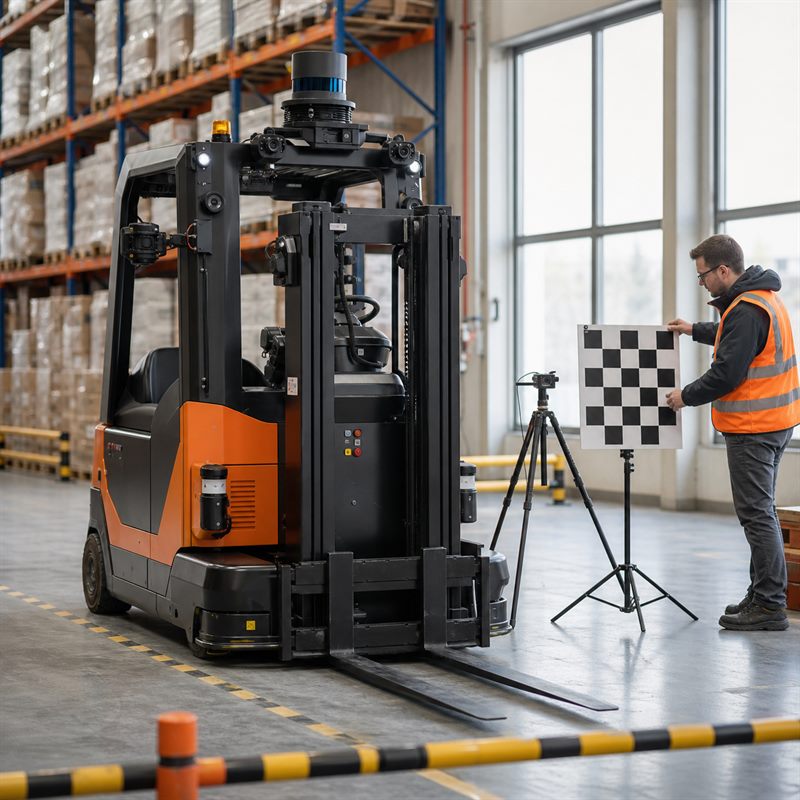
Sensor positions and coordinate systems must be calibrated so camera, lidar, IMU, and robot-body data can be fused correctly.
From Perception to Prediction
Advanced robot perception does not stop at detecting objects. It also supports prediction: where an object may move, whether a person may enter the path, how a load may shift, or whether a robot hand is likely to slip during grasping.
This step requires local AI compute because the robot often cannot wait for cloud processing. In warehouses, factories, outdoor sites, and airborne systems, perception decisions must happen close to the machine.
Short Answer
Robot perception requires multi-sensor input, accurate timing, sensor fusion, and local AI inference. A robot does not truly understand its environment until it can align sensor data and convert it into action-ready context.
Edge AI Hardware Requirements for Robot Perception
- Enough camera and sensor interfaces for the target robot architecture.
- High-throughput data movement for image, point cloud, and IMU streams.
- Local AI inference capability for detection, segmentation, localization, and prediction.
- Precise timing and synchronization across heterogeneous sensors.
- Stable thermal and power behavior under continuous robot operation.
Relevant MScape Platforms
- MScape N203: multi-camera robotics edge AI computer for sensor-rich perception systems.
- MScape N1000: high-performance robot brain for advanced perception, planning, and embodied AI workloads.
- MScape N210: compact robotics edge AI computer for local inference and multi-protocol communication.
Application Examples
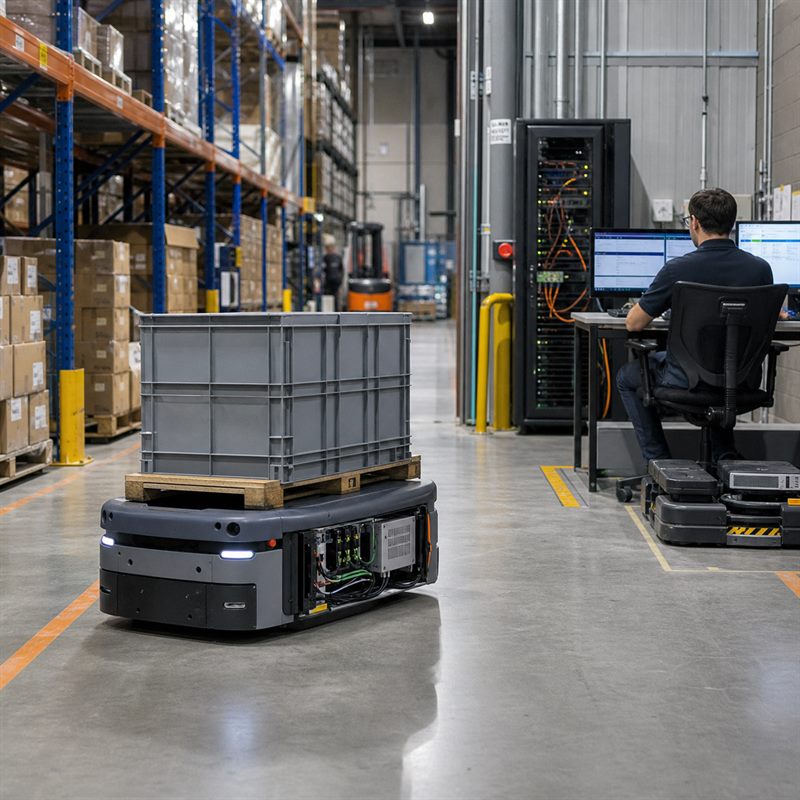
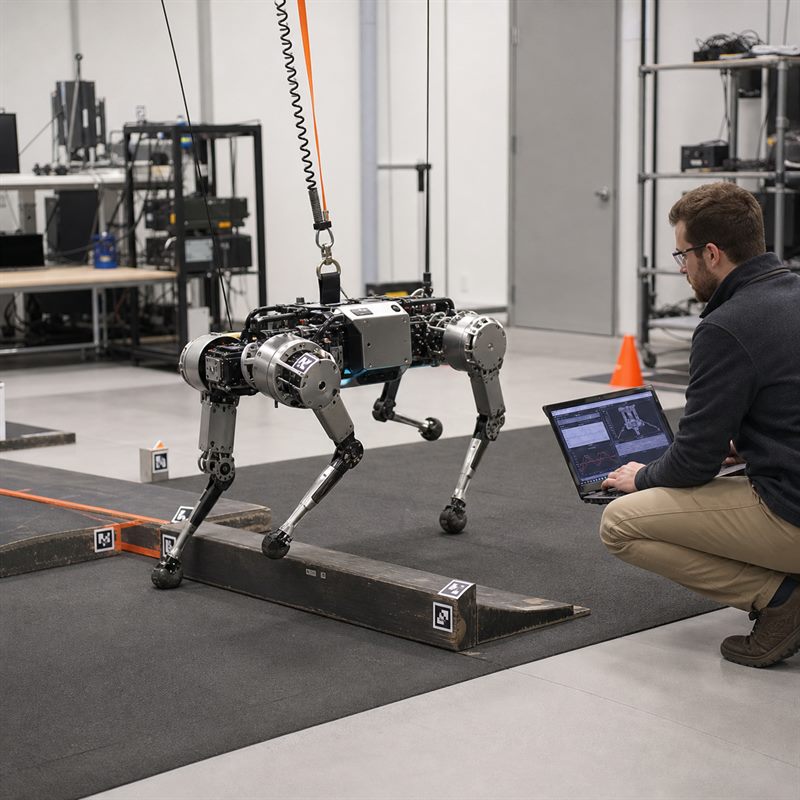
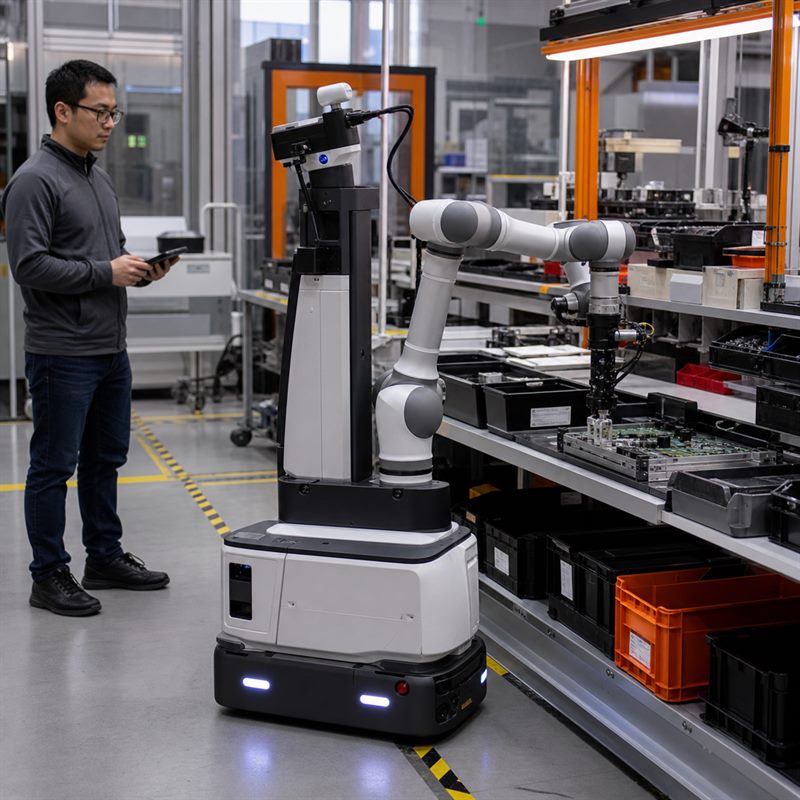
Multi-sensor perception is critical for autonomous forklifts, container transport vehicles, autonomous drones, quadruped robots, and wheeled humanoid robots.
FAQ
What is the difference between machine vision and robot perception?
Machine vision usually focuses on image-based recognition or inspection. Robot perception is broader: it combines vision, depth, motion, body state, and task context so the robot can act safely and intelligently.
Why is sensor fusion difficult in robots?
Robot sensors produce different data types at different rates and timestamps. The system must align time, space, calibration, and confidence before the data becomes useful.
Why should perception run on the robot side?
Robots need low-latency decisions. Local edge AI reduces cloud dependency and helps the robot respond when network conditions are unstable or when privacy and safety requirements demand local processing.