English
 Español
 Português
 Deutsch
 한국어
한국어 日本語
日本語 Italiano
 Français
 العربية
 Türkçe
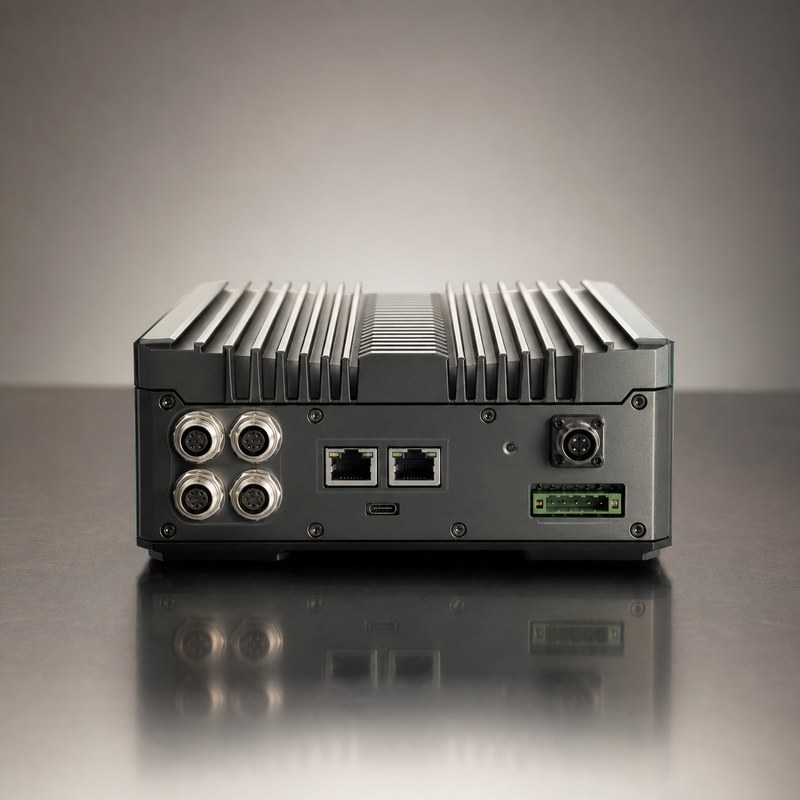
Humanoid robot programs usually fail their compute selection process when teams compare only TOPS and ignore camera growth, sensor routing, power limits, and how much inference must stay on the machine. A better question is which robot-side edge AI computer still fits once the humanoid moves from demo mode to deployment reality.
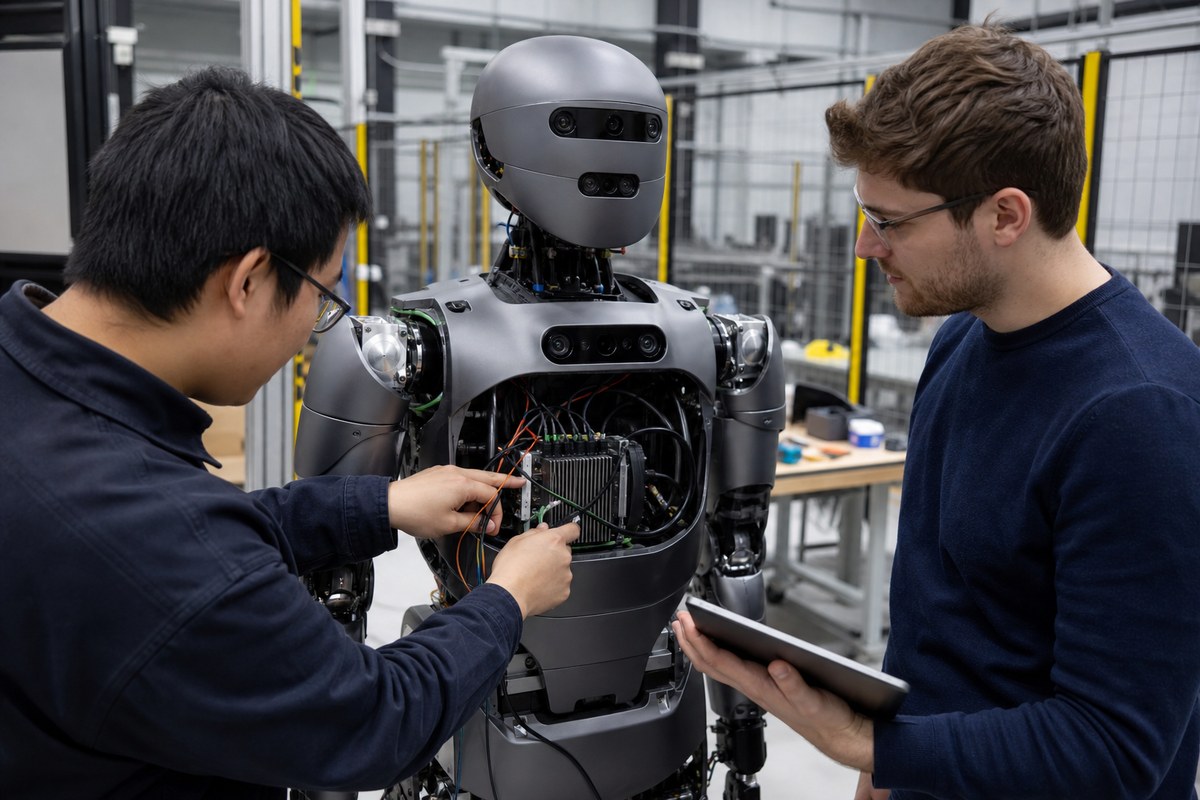
Why Humanoid Robots Push Compute Planning Earlier
A humanoid robot rarely stays with the first camera set or the first perception stack. As soon as the program expands from a lab demo into navigation, manipulation, teleoperation support, or semi-structured task execution, camera count increases, synchronization requirements tighten, and the compute platform has to bridge perception, networking, and control context inside a compact body. That is why a humanoid robot edge AI computer should be evaluated as part of the robot architecture, not as a late procurement item.
On the live English site, the MScape N210 robotics edge AI computer and the MScape N1000 high-performance robotics edge AI computer sit in the N Series lineup for teams that need robot-side NVIDIA-compatible compute with stronger camera and networking capacity or more headroom for heavier perception workloads. For overseas buyers, the practical choice is not “which board is bigger.” It is “which platform still fits after I count the sensors, local models, and deployment envelope honestly.”
What Changes Once a Humanoid Leaves Prototype Simplicity
Head, torso, hand, rear, and situational-awareness cameras often multiply faster than the original system diagram expected.
Humanoids cannot assume cloud availability for motion-adjacent perception, especially in mobile or interactive deployments.
Even if high-level planning is separate, perception compute still has to coexist with deterministic communication paths and safety-aware system behavior.
The robot body limits what the compute node can draw and how easily it can be serviced when the integration team is under schedule pressure.
How to Think About N210 vs N1000 for Humanoid Programs
The current N Series product overview frames the lineup around robot-side deployment, multi-camera perception, and practical embodied AI integration. Within that logic, N210 is the better starting point when the humanoid needs broad sensor connectivity and disciplined robot-body integration, while N1000 becomes more relevant when the workload pushes toward higher model complexity, more simultaneous perception tasks, or a larger compute margin for future software growth.
| Decision Area | N210 Tends to Fit Better When | N1000 Tends to Fit Better When |
|---|---|---|
| Camera topology | The robot needs richer camera and network connectivity with an emphasis on robot-body packaging and sensor fusion. | The robot also needs heavy concurrent perception or model growth beyond the first deployment scope. |
| Model strategy | The team can define a focused set of perception and control-adjacent inference workloads. | The team expects more ambitious multi-model pipelines, larger vision-language workloads, or significant roadmap expansion. |
| Power envelope | The build has stricter body-level power and thermal discipline and needs a balanced deployment path. | The robot can justify more compute headroom and has the mechanical and electrical budget to support it. |
| Program phase | The buyer is optimizing for integration fit, system clarity, and a deployable sensor architecture. | The buyer is planning for compute-intensive embodied AI iterations and wants more performance margin from the start. |
Four Engineering Questions That Matter More Than TOPS
1. How many visual channels are truly on the roadmap?
Many humanoid teams specify only the first prototype camera set, then discover that hand cameras, situational-awareness views, or manipulation cameras must be added later. That changes connector planning, bandwidth assumptions, and service strategy. If the final robot will grow beyond the early camera plan, the compute decision should reflect the later architecture, not the bench demo.
2. Which inference loops must remain on the robot side?
Humanoid robots benefit from local inference because perception, teleoperation feedback, navigation context, and manipulation cues all become less dependable when they rely on cloud round trips. The question is not whether cloud tools have value. The question is which workloads must remain stable even when connectivity is weak or unavailable.
3. What control bus and real-time context surround the AI computer?
A humanoid edge AI computer does not work in isolation. It sits next to motion subsystems, sensor buses, power-management logic, and recovery behavior. The right platform therefore depends on more than model throughput. It depends on how the compute node fits the rest of the robot control stack and how cleanly the team can integrate it.
4. What happens when the software stack gets heavier?
The first version of a humanoid robot almost never represents the final software load. More perception tasks, more autonomy layers, and richer interaction features tend to follow. If the roadmap is compute-heavy, starting the evaluation with both N210 and N1000 on the shortlist is usually more realistic than forcing an early single-choice assumption.
Selection Shortcut
If your humanoid robot is still defining camera layout, control-bus boundaries, and body-level power allocation, do not reduce the decision to a benchmark comparison. Treat N210 as the architecture-fit baseline and N1000 as the compute-growth path, then test against the real sensor and deployment plan.
Where This Fits in a Real Humanoid Evaluation Workflow
The live Bipedal / Humanoid Robots application page makes the use case explicit, while the About MScape page positions the company around robot architecture, platform matching, and integration support. That sequence matches how overseas engineering teams usually buy: first clarify the embodiment and sensor strategy, then match the compute platform, then move into integration details and deployment planning.
The Chinese official site adds broader proof that the company presents the N Series as NVIDIA-based embodied AI compute and shows application coverage across humanoids, quadrupeds, collaborative robots, drones, forklifts, and unmanned transport systems. For this overseas topic, the useful conclusion is narrow: a humanoid robot edge AI computer should be judged on camera growth, robot-side inference, connectivity, and deployment resilience, not on generic “AI box” language.
Short Buyer Checklist Before You Request a Quote
- Define prototype camera count, pilot camera count, and likely deployment camera count separately.
- List which perception tasks must survive network instability and remain fully local.
- Map the sensor stack beyond cameras, including IMU, force sensing, lidar, encoders, or hand-specific sensing.
- Document the control bus, Ethernet plan, and any deterministic timing constraints.
- Estimate the body-level power and thermal envelope for the compute node, not just the lab power supply.
- Decide whether the roadmap needs balanced integration first or larger compute headroom from day one.
FAQ
Is N210 always enough for humanoid robots?
No. N210 is a strong fit when the core challenge is sensor-rich robot-body integration, but compute-heavy humanoid programs may need N1000-level headroom depending on model complexity and workload concurrency.
Should humanoid teams optimize for cloud-connected AI instead of robot-side inference?
Not for the workloads that directly affect perception timing, responsiveness, or deployment continuity. Cloud tools can support development and analytics, but robot-side inference remains critical for practical operation.
What is the biggest planning mistake in this category?
Underestimating final camera count and sensor complexity. That mistake usually forces a compute rethink after mechanical and software assumptions have already spread through the program.
Start With the Humanoid Architecture, Not a Generic Spec Sheet
If you are evaluating an N Series platform for a humanoid robot, use the MScape inquiry page and share your robot type, camera count, sensor stack, control bus, compute target, power budget, and deployment timeline. That is the fastest way to judge whether N210 or N1000 is the better deployment fit.