English
 Español
 Português
 Deutsch
 한국어
한국어 日本語
日本語 Italiano
 Français
 العربية
 Türkçe
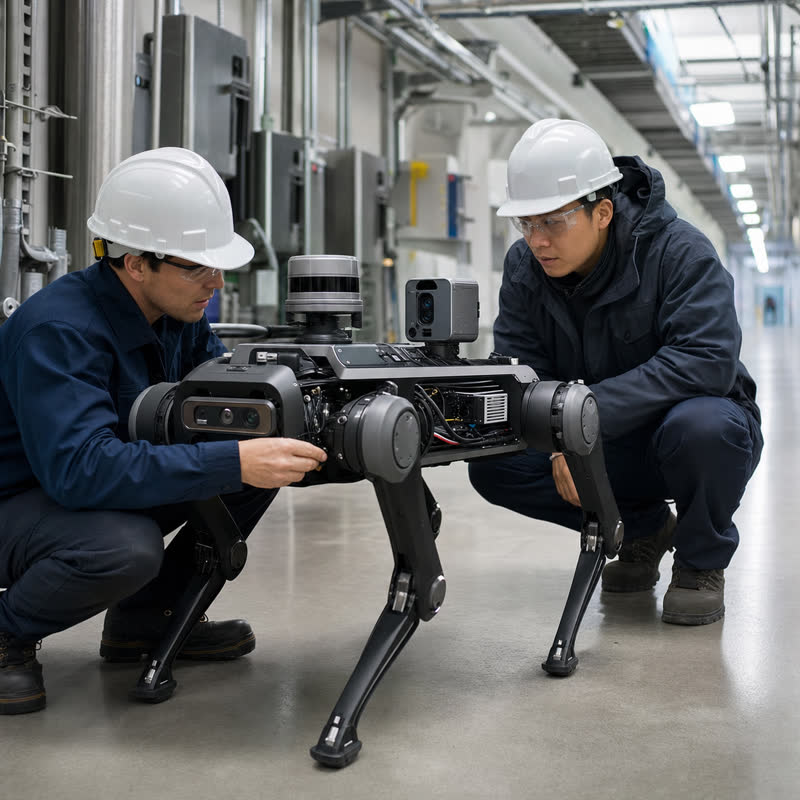
Short answer: a robot compute platform selection checklist should start with the final sensor topology and deployment envelope—not a headline TOPS number. For N Series buyers, the useful choice is the platform that can carry the planned cameras, local inference, interfaces, power, and service needs through pilot deployment.
Why a Robot Compute Platform Checklist Matters
Robotics teams often choose compute when the mechanical layout is still changing. That creates a familiar problem: the first prototype works with a narrow camera set and a bench power supply, then the pilot requires more perception channels, field networking, a protected installation location, and repeatable service access. The original comparison did not fail because the team missed a benchmark. It failed because the computer was treated as an isolated component instead of part of the robot architecture.
For overseas projects evaluating an MScape N Series robotics edge AI computer, use the checklist below to translate the robot brief into an engineering conversation. The N Series is positioned for NVIDIA-based robot-side compute; the appropriate fit depends on workload and integration details, not a universal model ranking.
The Five Checks Before You Compare Platforms
Count the cameras you will deploy, not only the cameras on today’s prototype. Then add lidar, IMU, encoders, radar, force sensing, and any timing or synchronization needs.
Separate motion-adjacent perception and safety-relevant awareness from cloud-assisted analytics. Identify which models must keep running when connectivity is limited.
Map camera input, Ethernet, USB, serial, CAN or other control-bus needs before deciding whether a platform has enough practical I/O.
Use the robot’s real battery, enclosure, airflow, and duty cycle. A lab supply does not represent a sealed mobile deployment.
Plan connectors, strain relief, cable routing, access for replacement, and how the platform will be protected from vibration, dust, or handling.
Ask which models, camera channels, and software functions may arrive after the pilot. Reserve enough margin without paying for unusable capacity.
Selection Table: Turn the Robot Brief Into a Shortlist
| Decision area | What to document | Why it changes the compute choice |
|---|---|---|
| Perception load | Camera count, resolutions, frame rates, model types, simultaneous tasks | Defines the practical inference and input-bandwidth requirement rather than an abstract performance target. |
| Sensor fusion | Non-camera sensors, timestamping expectations, fusion architecture | Shows whether the platform must support a richer sensor and communication topology. |
| Robot connectivity | Network links, control bus, diagnostics, remote support path | Prevents an AI node from becoming an interface bottleneck inside the robot. |
| Deployment conditions | Battery limits, enclosure space, ambient temperature, vibration, operating hours | Tests whether the proposed performance can be packaged and sustained in the intended machine. |
| Program maturity | Prototype, pilot, or production stage; expected software growth | Balances a compact integration-first option against the need for more compute headroom. |
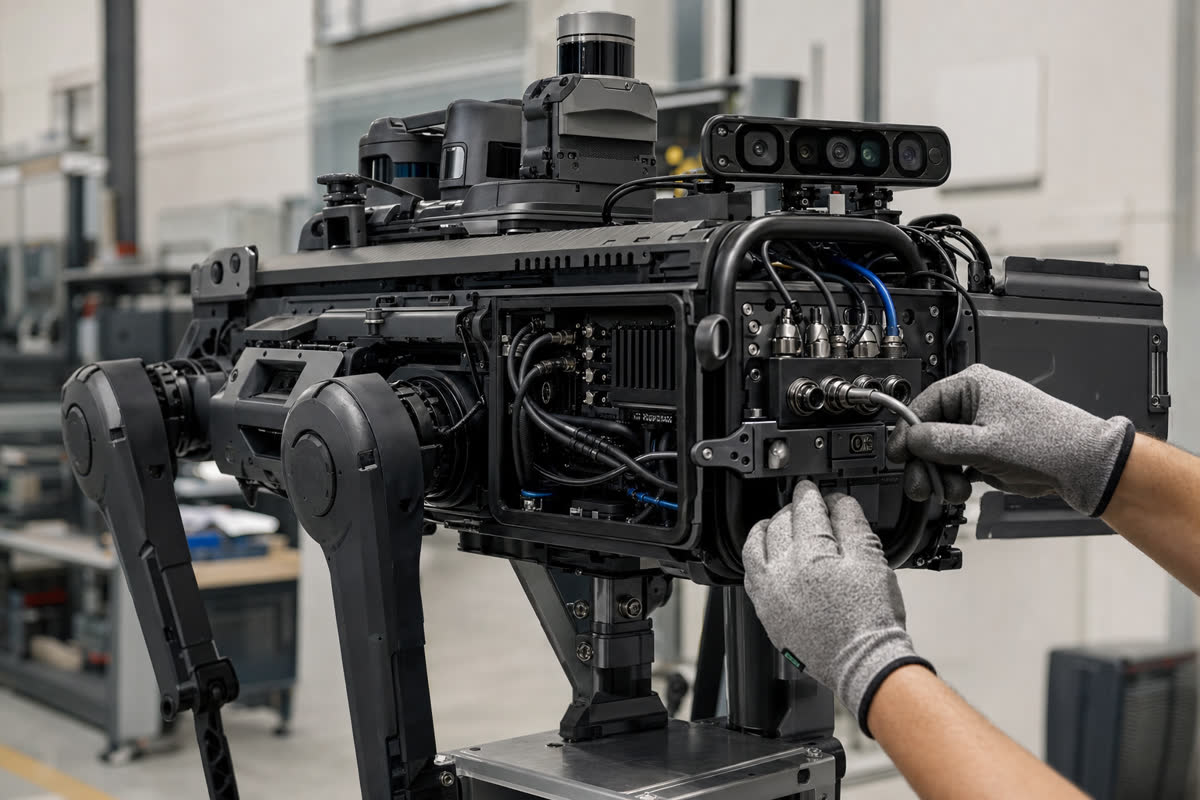
A useful evaluation considers the installed sensor and cable path, not just a standalone specification sheet.
How This Applies to N Series Buyers
The N Series lineup spans compact robot-side compute, camera-rich perception, sensor-fusion-oriented integration, and higher-performance workloads. A buyer may begin with a compact path when packaging and connected-device integration are central, then evaluate a camera-focused or sensor-fusion path as the robot adds visual channels and industrial interconnect. Compute-heavy embodied AI programs can require a higher-performance path where concurrent models and future growth are the governing constraint.
The right outcome is a short, evidence-based candidate list—not an unsupported promise that one model fits every robot. MScape’s broader application coverage includes quadruped robots, humanoids, collaborative robots, drones, forklifts, and autonomous transport on its application cases page. Those deployments differ substantially in sensor placement, enclosure limits, network topology, and power budget; the checklist makes those differences visible early.
A Practical Evaluation Workflow
Start with the deployment drawing
Put the proposed computer on the actual robot drawing. Identify connector orientation, harness length, protected mounting zone, cooling path, and service access. If these cannot be resolved on the drawing, a spec-sheet comparison is premature.
Replay the heaviest credible workload
Test the camera and sensor configuration expected in pilot deployment, including the inference tasks that must remain local. Benchmarks are helpful evidence, but they should reflect concurrent robot workloads and the intended operating envelope.
Review integration ownership
Make clear who owns camera integration, power design, control-bus mapping, thermal validation, and field diagnostics. This prevents ambiguity from becoming a late-stage hardware change.
Buyer shortcut
If your team cannot yet state the deployment camera count, sensor stack, control bus, and power budget, do not select by performance headline alone. Close those four inputs first, then compare the N Series candidates against the actual robot package.
Trust and Integration Questions Worth Asking
Overseas buyers should also ask how a supplier approaches platform matching, integration evidence, and product support. The About MScape page gives the company context; it is a useful starting point before moving into an engineering review. Request interface documentation, deployment assumptions, and a discussion of the intended robot architecture. Careful answers are more valuable than broad claims about performance.
FAQ
Is TOPS enough to select a robot AI computer?
No. It is one input. Camera interfaces, sensor fusion, power, thermal behavior, networking, packaging, and serviceability can determine whether a platform is deployable.
When should a team choose more compute headroom?
When the credible roadmap includes heavier concurrent models, more perception channels, or substantial software growth—and the robot can support the associated electrical and mechanical envelope.
What should be ready before requesting an N Series recommendation?
A concise robot brief: application, camera count, sensor list, control bus, local inference goals, power budget, packaging constraints, and timeline.
Prepare a Better N Series Engineering Review
Use the MScape inquiry page and share your robot type, camera count, sensor stack, control bus, compute target, power budget, and deployment timeline. That gives the engineering team the inputs needed to discuss an N Series platform fit for your real deployment.