English
 Español
 Português
 Deutsch
 한국어
한국어 日本語
日本語 Italiano
 Français
 العربية
 Türkçe
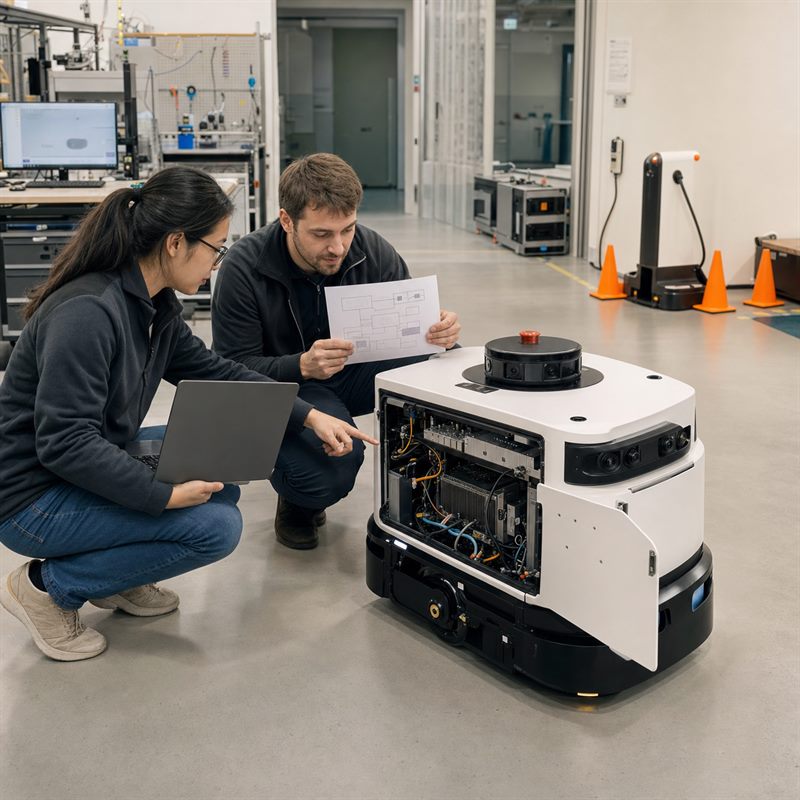
Choosing a robotics edge AI computer for an overseas robot program is not only about TOPS. The right fit depends on how many cameras and sensors you need to close to the machine, which control buses must stay deterministic, how much thermal and power headroom the robot can carry, and how quickly your team must move from evaluation to deployment.
Why N Series Selection Should Start With the Robot Architecture
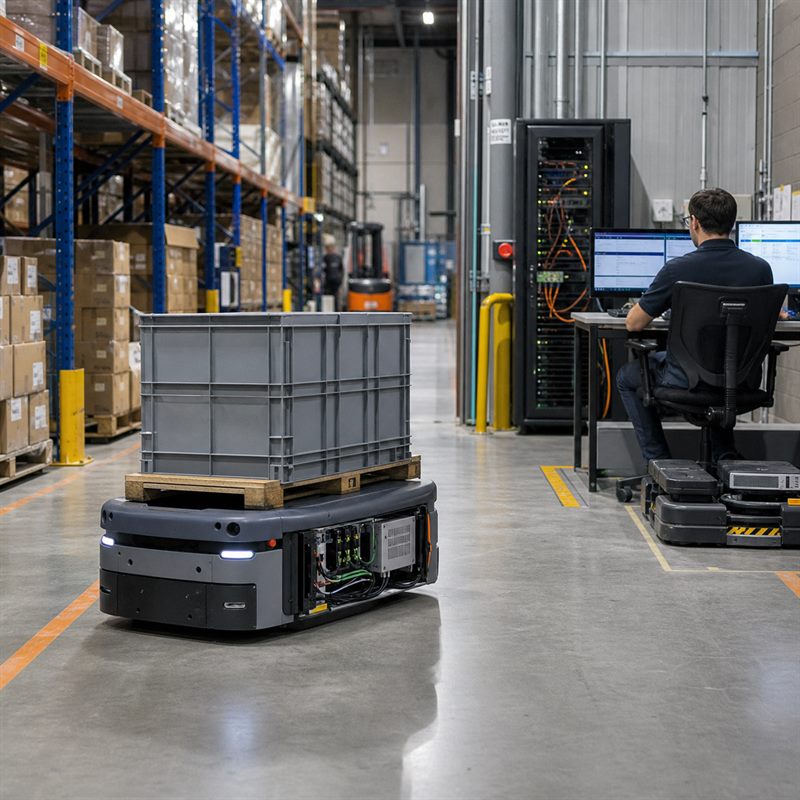
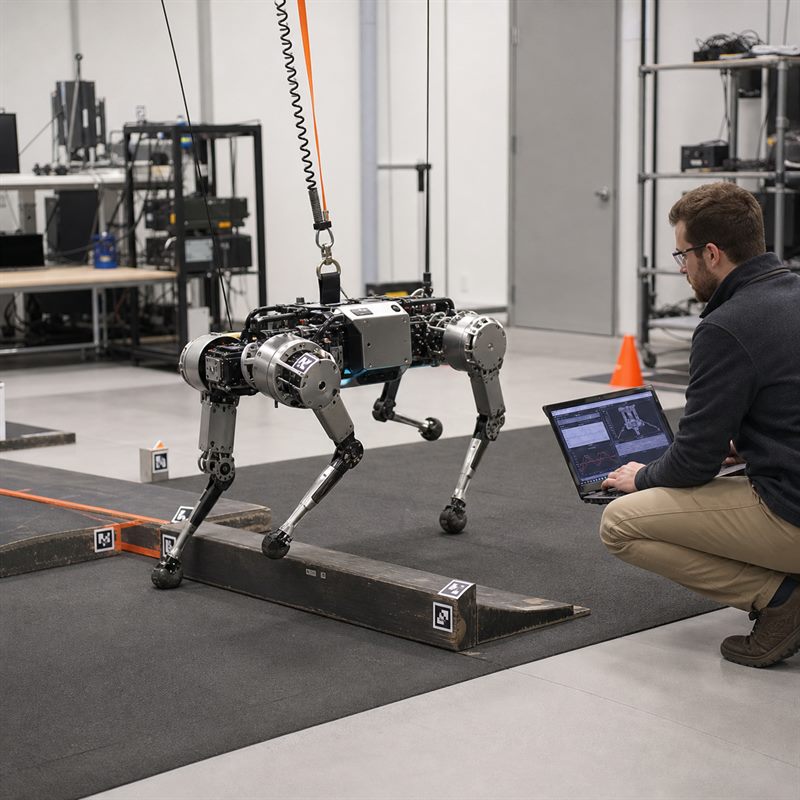
For overseas robot builders, the practical question is not “Which module has the biggest headline number?” It is “Which platform matches the actual perception, control, connectivity, and packaging limits of this robot?” A warehouse AMR, a quadruped inspection platform, and a humanoid pilot program can all use edge AI, but they do not impose the same constraints on camera input, network links, bus integration, or local model size.
The MScape N Series product portfolio is positioned around robot-side AI computing for embodied systems, with model paths that range from compact controller-class deployment to higher-performance platforms for sensor-rich and compute-heavy robots. If your team defines the application envelope first, model selection becomes much faster and less risky.
The Six Questions to Answer Before You Compare Models
How many cameras, what resolution, and whether your stack also includes lidar, IMU, encoders, or force sensing.
Whether the robot needs hard real-time behavior, industrial fieldbus support, or tight coordination between inference and actuation.
Whether the robot depends on 5G, Wi-Fi, Ethernet, or multiple industrial communication paths inside one enclosure.
Available volume, cable routing limits, shock and vibration exposure, and how much service access the mechanical design allows.
Whether the workload is classic perception inference, multi-camera fusion, or a larger embodied AI stack with heavier local models.
Whether you are evaluating a first prototype, preparing a customer pilot, or locking a repeatable deployment BOM for scale.
How the N Series Maps to Common Overseas Project Needs
| Model Path | Best Fit | What to Validate First |
|---|---|---|
| N100 | Compact controller-oriented projects that need a small footprint with deterministic control behavior. | Bus architecture, hard real-time expectations, camera count, and whether the robot needs controller and AI functions close together. |
| N201 | Compact 200 TOPS-class embedded AI deployments that need strong connectivity and local inference in a tight package. | Wireless and wired communication mix, enclosure limits, and moderate perception workloads. |
| N203 | Sensor-rich robots that need multi-camera perception, especially when GMSL2 input matters. | Camera topology, synchronization, cable distance, and how much preprocessing must stay on the robot. |
| N210 | Humanoid, wheeled humanoid, and embodied AI platforms that need compact deployment plus broader protocol coverage. | Sensor fusion plan, industrial interconnect mix, and compute sharing across perception, planning, and control. |
| N1000 | Advanced robots with heavier local AI loads, larger models, or multiple perception pipelines running together. | Thermal budget, power envelope, memory demand, and whether the robot truly benefits from higher local model capacity. |
Selection Logic by Project Scenario
When N100 Makes Sense
If your program starts from control discipline first, the N100 path is worth attention. The Chinese official product evidence describes the N100 as a compact platform with commercial EtherCAT integration, Xenomai hard real-time support, and support for up to 10 camera inputs. That combination matters when a robot builder wants tight control timing without separating controller logic too far from local intelligence. For overseas buyers, that usually points to early-stage embodied systems, compact service robots, or projects that need a controller-class footprint but still want local AI at the edge.
When N201 Is the Better Starting Point
The N201 path is stronger when your main challenge is not hard real-time control, but compact deployment plus communications. The live English product positioning highlights a 200 TOPS-class embedded AI computer with 5G, Wi-Fi, and Ethernet connectivity. That is a practical fit for mobile robots, connected field devices, and overseas deployments where remote diagnostics, fleet links, and local inference all need to coexist in one package.
When N203 Should Move to the Shortlist
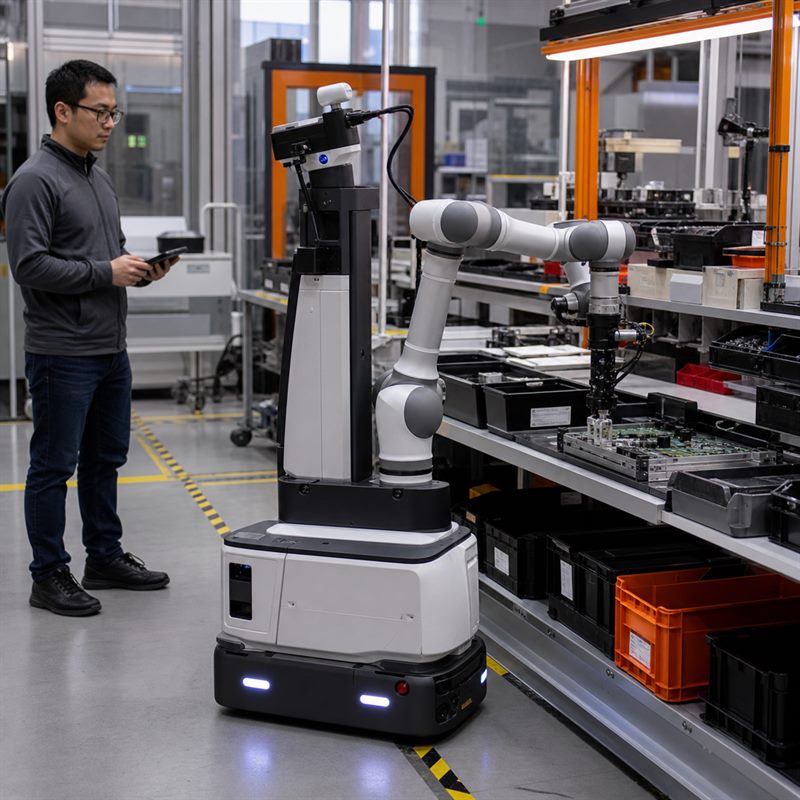
Many robot teams underestimate the integration burden of vision. Once camera count rises, cable management, interface choice, and synchronization become selection drivers. The N203 is positioned for multi-camera robotics workloads and public site messaging highlights GMSL2-oriented perception scenarios. If your robot architecture depends on several vision channels and you want the compute close to those sensors, this is usually the point in the N Series where the conversation becomes much more application-specific.
When N210 or N1000 Become Necessary
The N210 is the more balanced option when the robot needs broad protocol support, sensor fusion, and a compact third-generation robot-brain style platform. The N1000 is the step up when the workload is genuinely compute-heavy: more perception streams, more demanding embodied AI stacks, or larger local models. Teams should resist overbuying here. Higher compute is helpful only if the rest of the robot architecture can feed it, cool it, and use it.
What Overseas Buyers Should Evaluate Beyond TOPS
Use raw compute as one filter, not the whole decision. In robotics, the better purchase often comes from the platform that reduces integration friction: the right camera interfaces, the right bus support, the right physical size, and the right communication stack for your deployment geography and service model.
Where Trust and Validation Fit Into the Decision
Supplier evaluation is part of engineering selection. The current About MScape page positions the company around practical embodied intelligence computing, while the Chinese official site shows a broader company footprint across humanoids, quadrupeds, wheeled humanoids, collaborative robots, autonomous forklifts, drones, and container transport vehicles. That matters because buyers are not only buying silicon compatibility. They are also judging whether the supplier understands robot-side deployment realities across multiple application categories.
The same official material also points to NVIDIA-based N Series positioning and a product family built around embodied AI compute foundations. For overseas teams, the useful takeaway is to ask concrete questions during evaluation: which model best matches your robot architecture, what interfaces are already proven in comparable projects, and how the platform can be adapted for the deployment path you are targeting. Reviewing relevant application cases is a good way to narrow that discussion before a detailed technical exchange.
A Practical Shortlisting Workflow
- Start with robot class: compact mobile robot, vision-heavy machine, humanoid, quadruped, or compute-heavy embodied platform.
- Write down exact camera count and interface type before comparing models.
- Separate real-time control needs from pure inference needs so you do not buy the wrong architecture.
- Check enclosure volume, available cooling path, and allowed power draw early, not after software selection.
- Use the deployment timeline to decide whether you need the fastest path to evaluation or the strongest path to long-term scaling.
Start the N Series Evaluation With Real Robot Inputs
If you are selecting an N Series robotics edge AI computer for an overseas project, send the engineering basics through the MScape contact page: your robot type, camera count, sensor stack, control bus, compute target, power budget, and deployment timeline. That information makes it much easier to narrow the platform path quickly and discuss the right N Series fit for your build.